Case study · 2026
GymBro Designed. Built. Used every day.
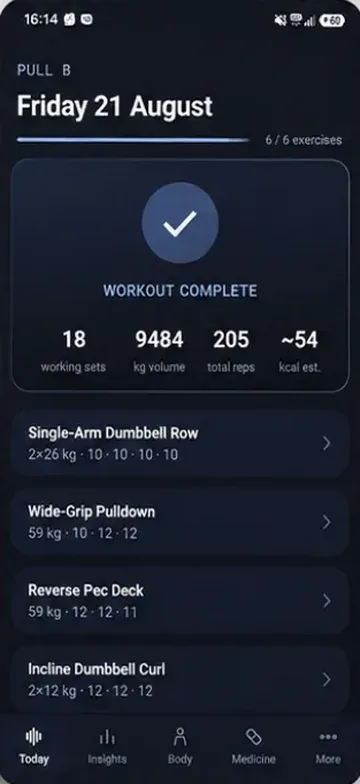
Most fitness apps hide the one number you need inside charts and history. GymBro shows what you did last time and what to do now.
- RoleProduct, design and build
- StatusSelf-initiated, August 2026. In daily use.
- Built withHTML, CSS, JavaScript, PHP, MySQL
The problem
Between sets you need one answer, not a chart.
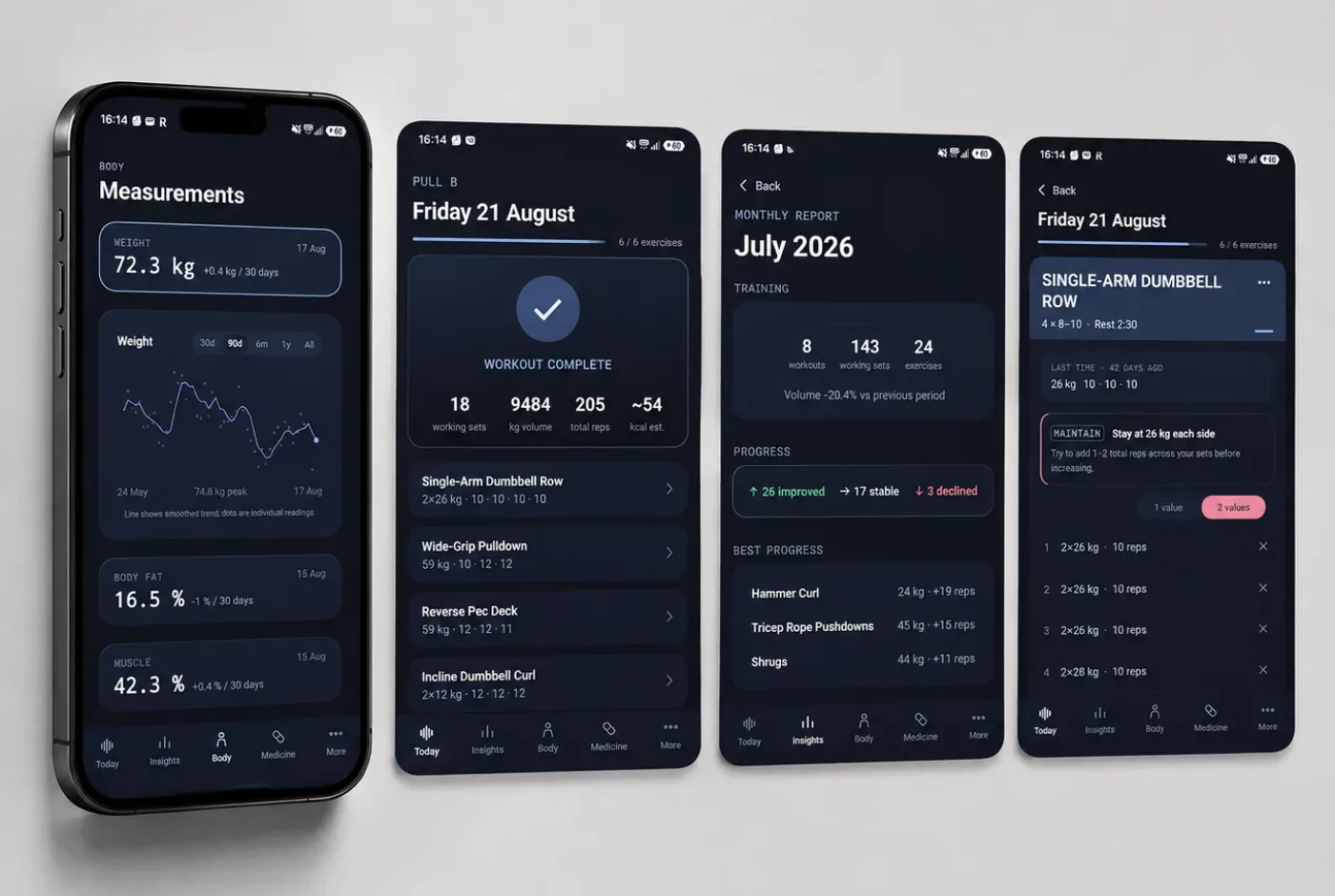
Every exercise opens with the previous weight, reps and date, then suggests maintaining, adding reps or adding weight. Single-arm exercises track each side. Four views cover body measurements, completed workouts, monthly insights and exercise history.
DecisionShow one instruction instead of a chart.
The build
No framework. No build step.
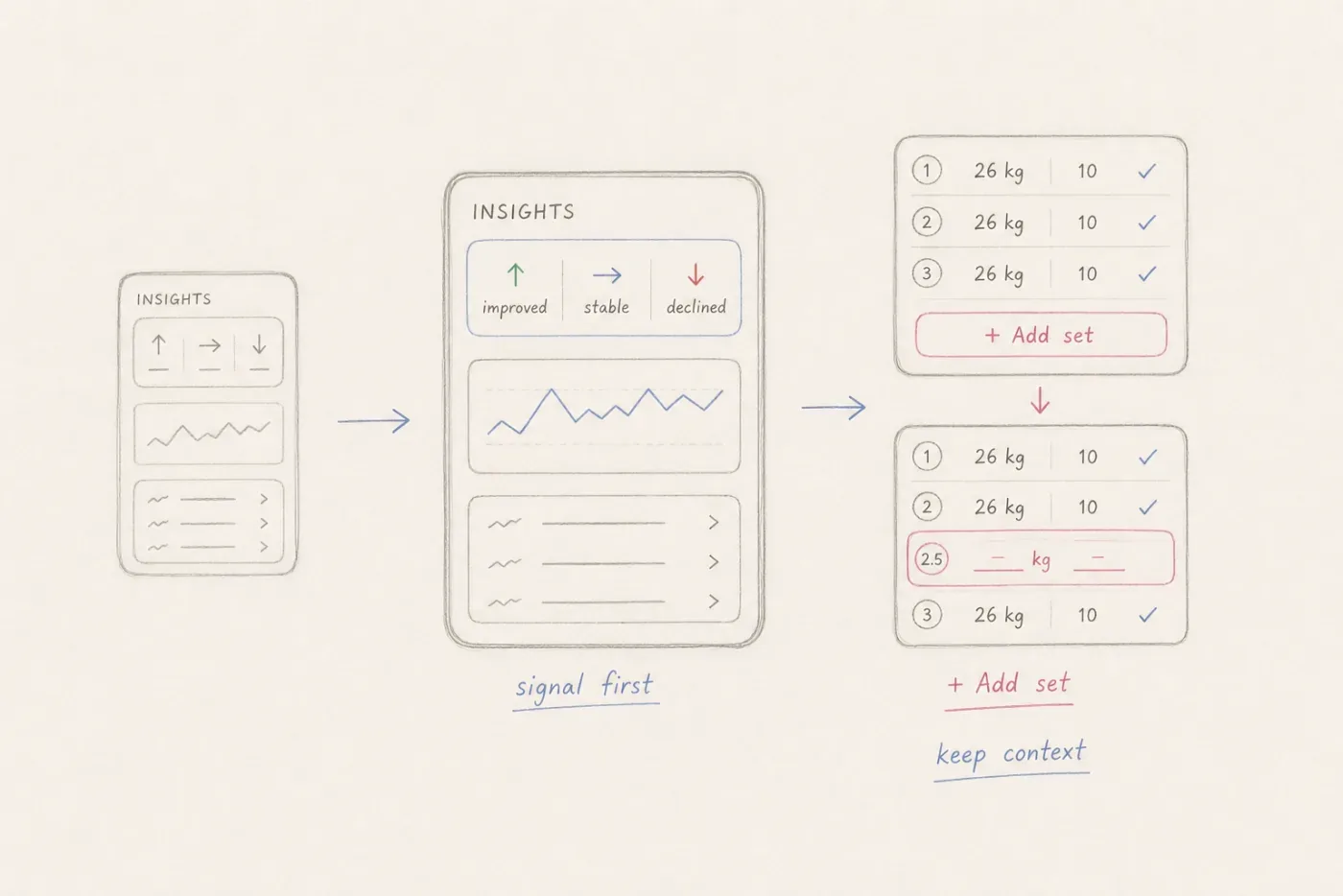
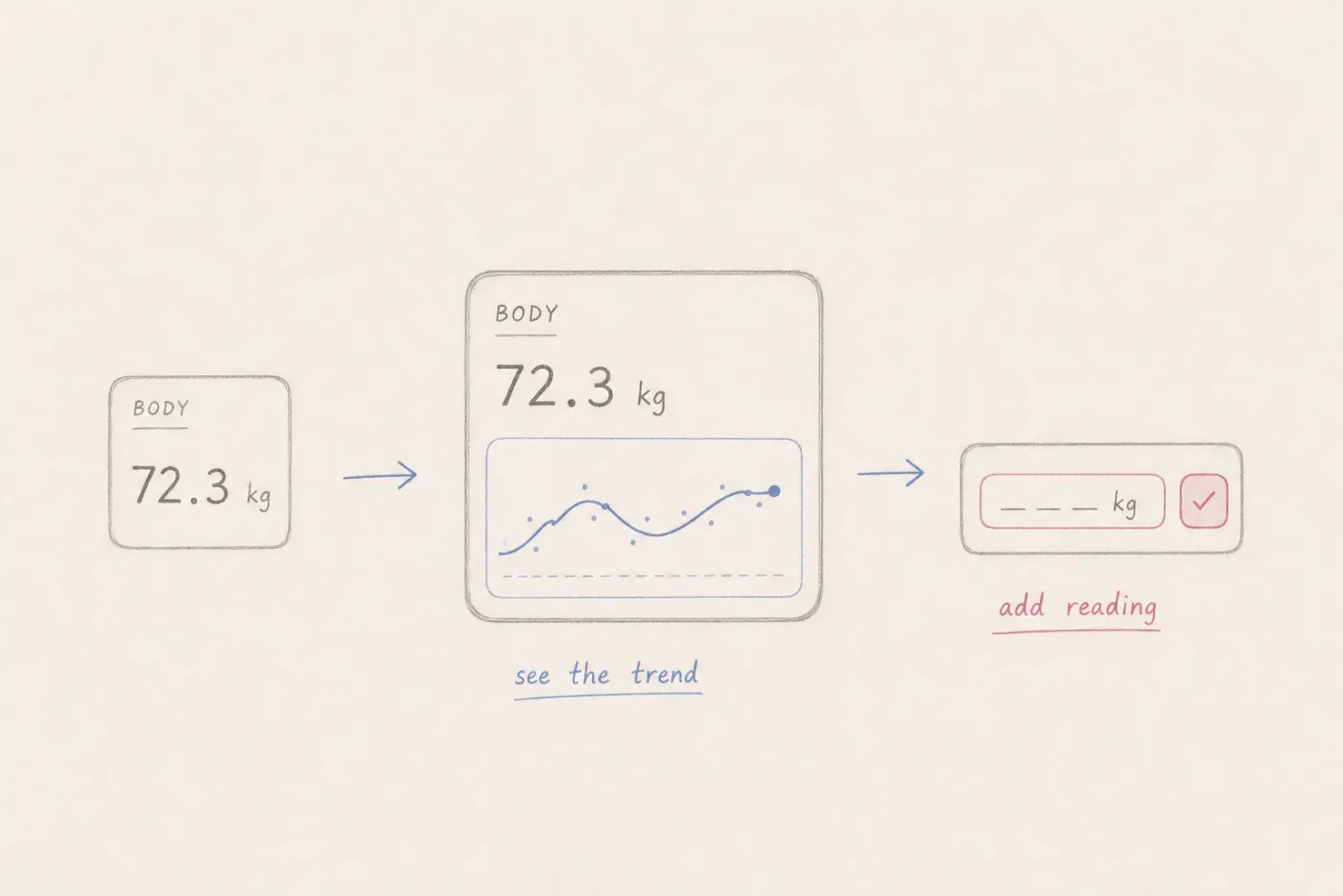
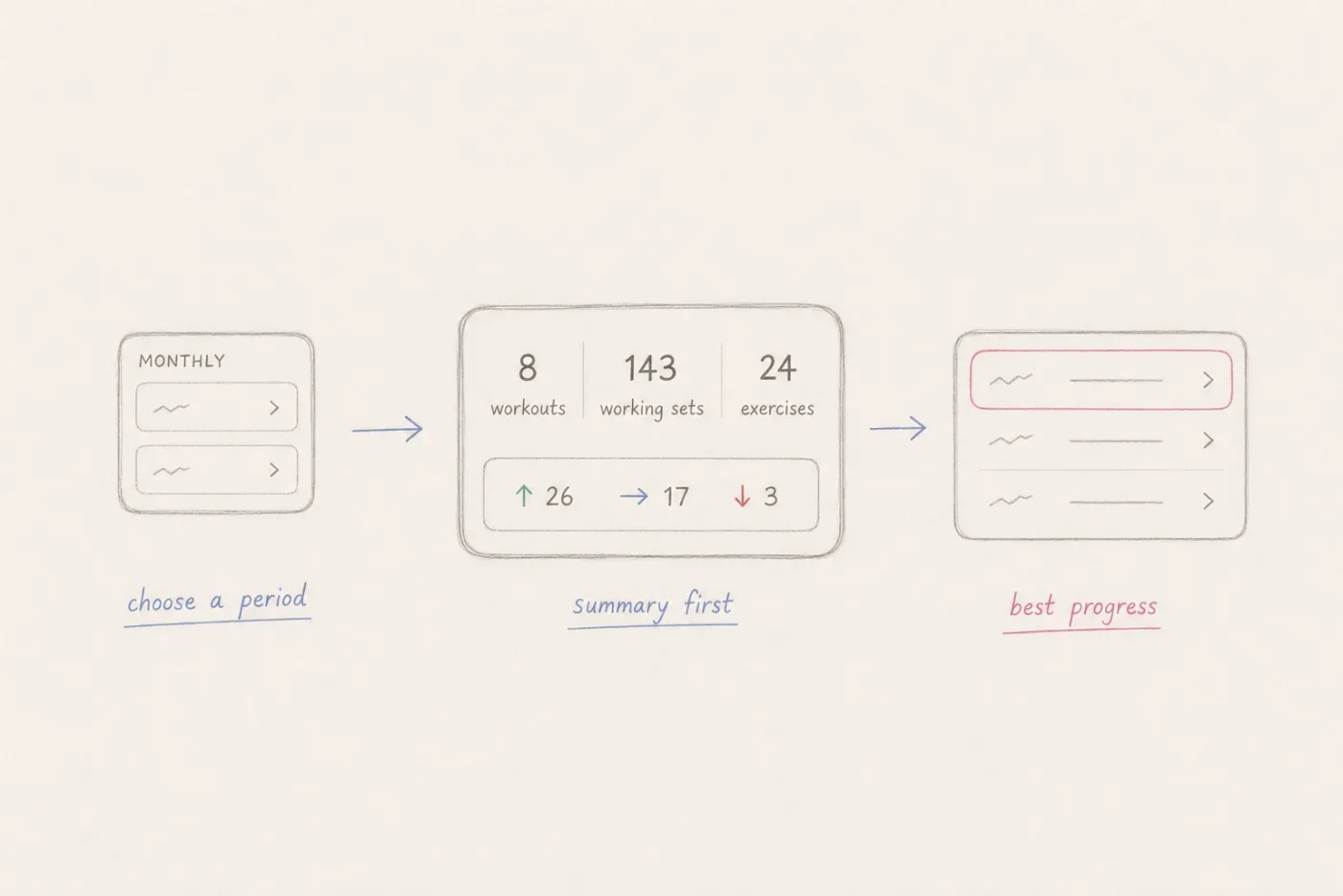
Three flows on paper first, then plain HTML, CSS and JavaScript, with PHP and MySQL on shared hosting, and an offline queue for dropped connections. Claude helped scaffold screens and debug; I tested the flows and checked the data myself.
AI’s role
A coach that reads the data, not a calculator.
Every number on screen is calculated, not generated. Every few weeks I give Claude my goal and the full dataset and ask for changes to the program. I review every suggestion before anything changes.
DecisionAI proposes. I decide.
Next case study
Novorésumé →