Case study · 2016–2019
Shopbox A busy counter. One calm system.
An iPad point of sale and a web back-office had grown apart. I made them one product, then moved upstream to own the backlog, roadmap and delivery for a distributed team.
- RoleUX/UI Designer, then Lead Product Manager
- TeamA distributed development team
- WithDevelopers, sales and the CTO
- Scale100+ merchants in 3 countries
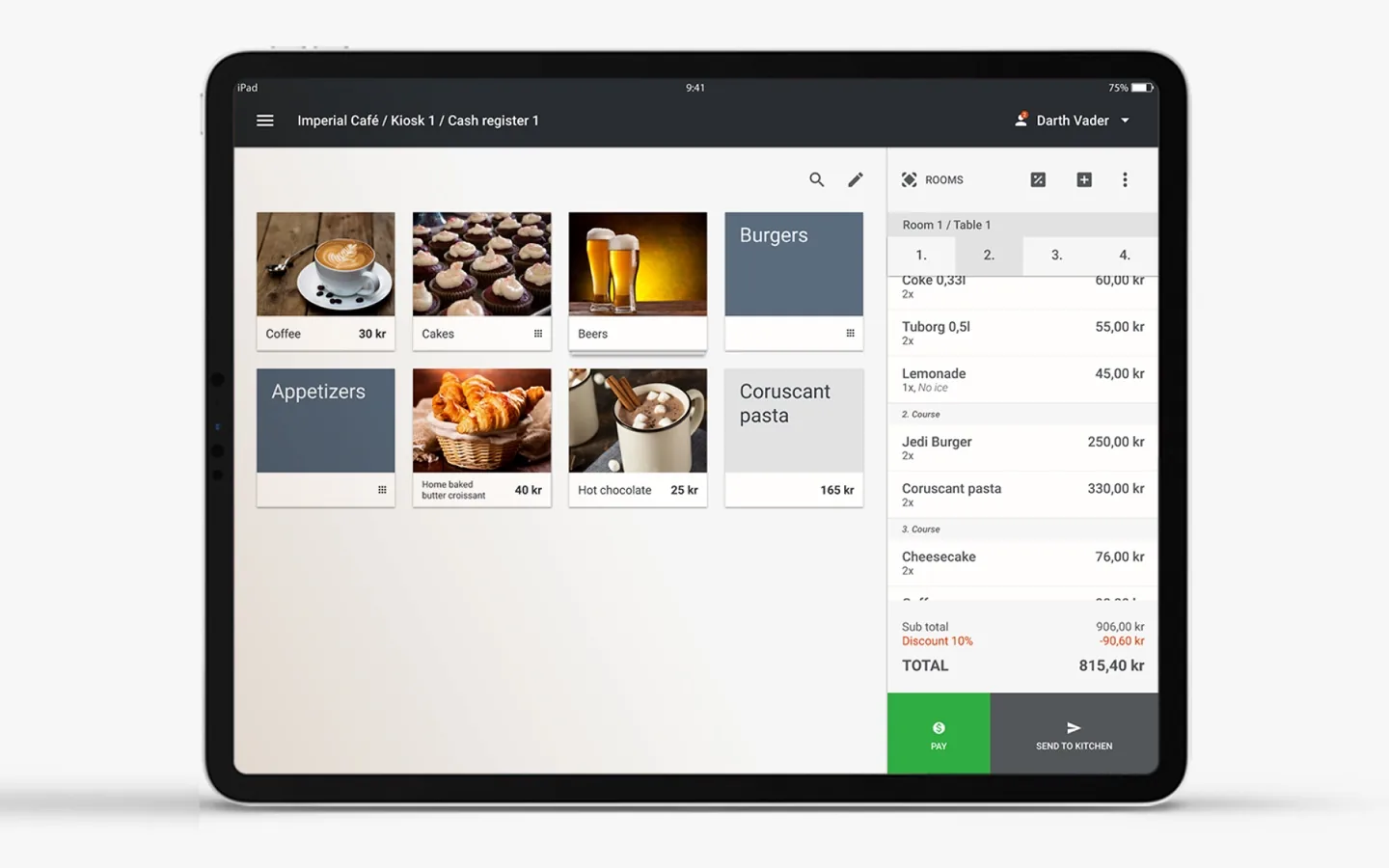
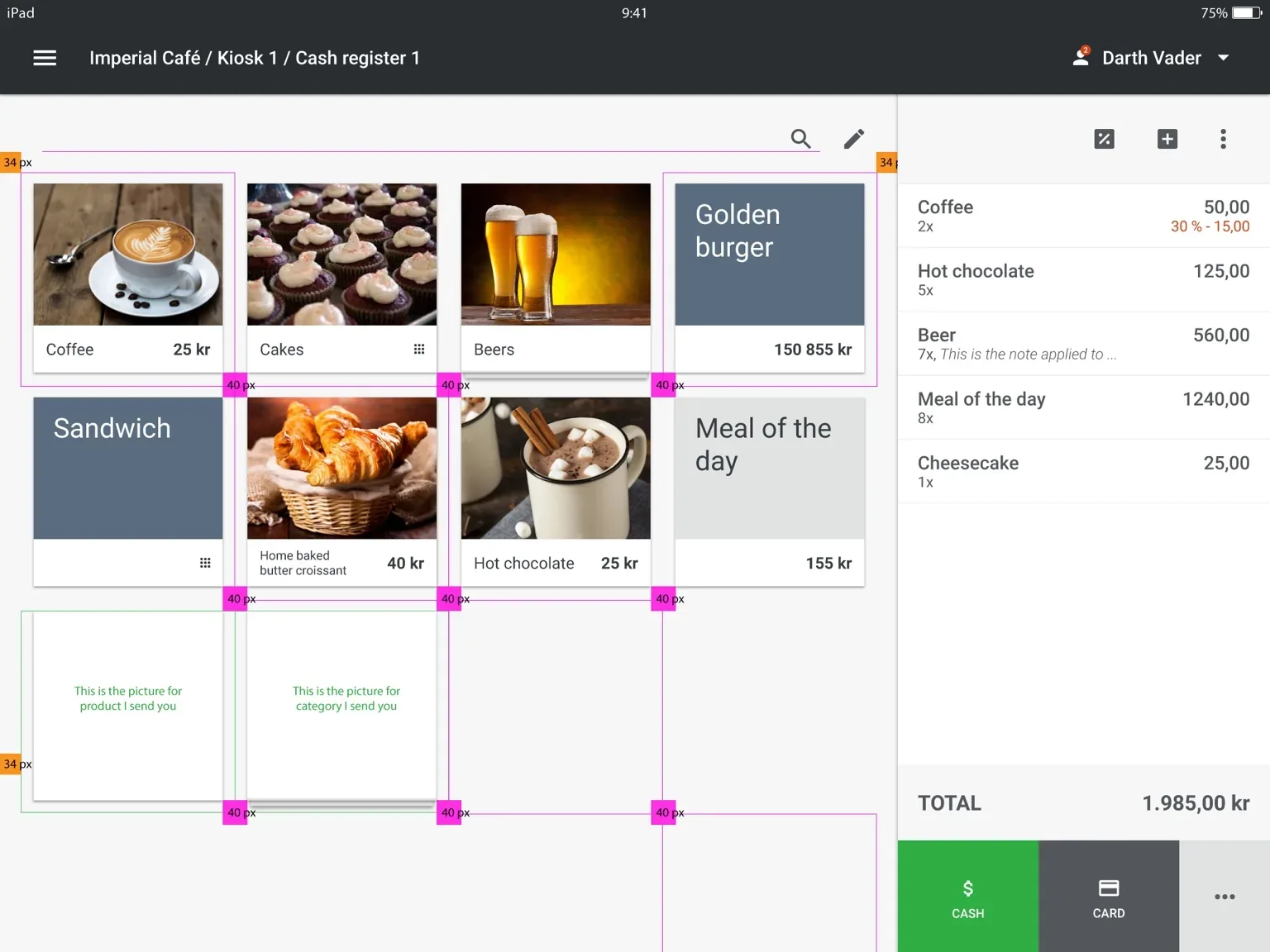
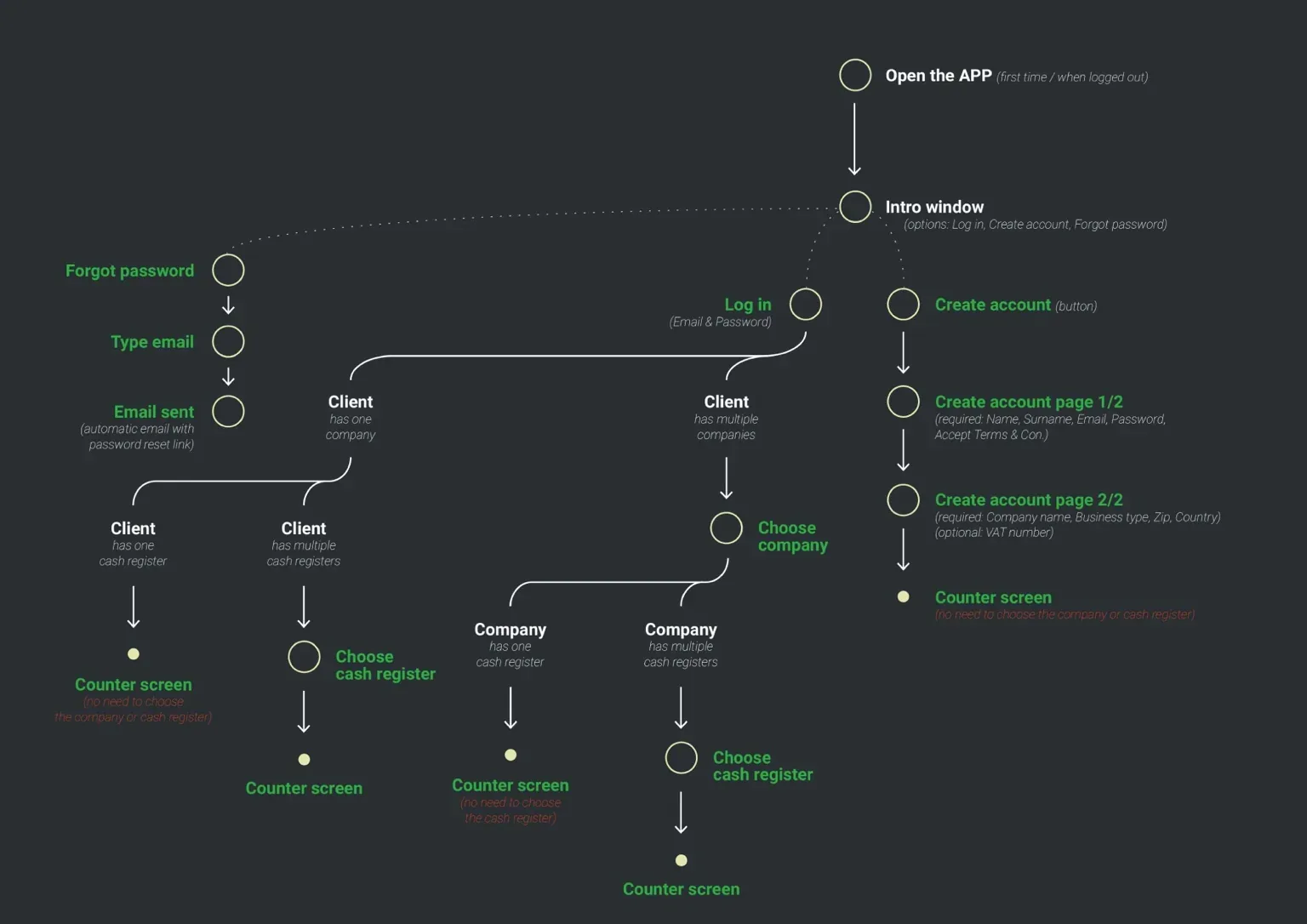
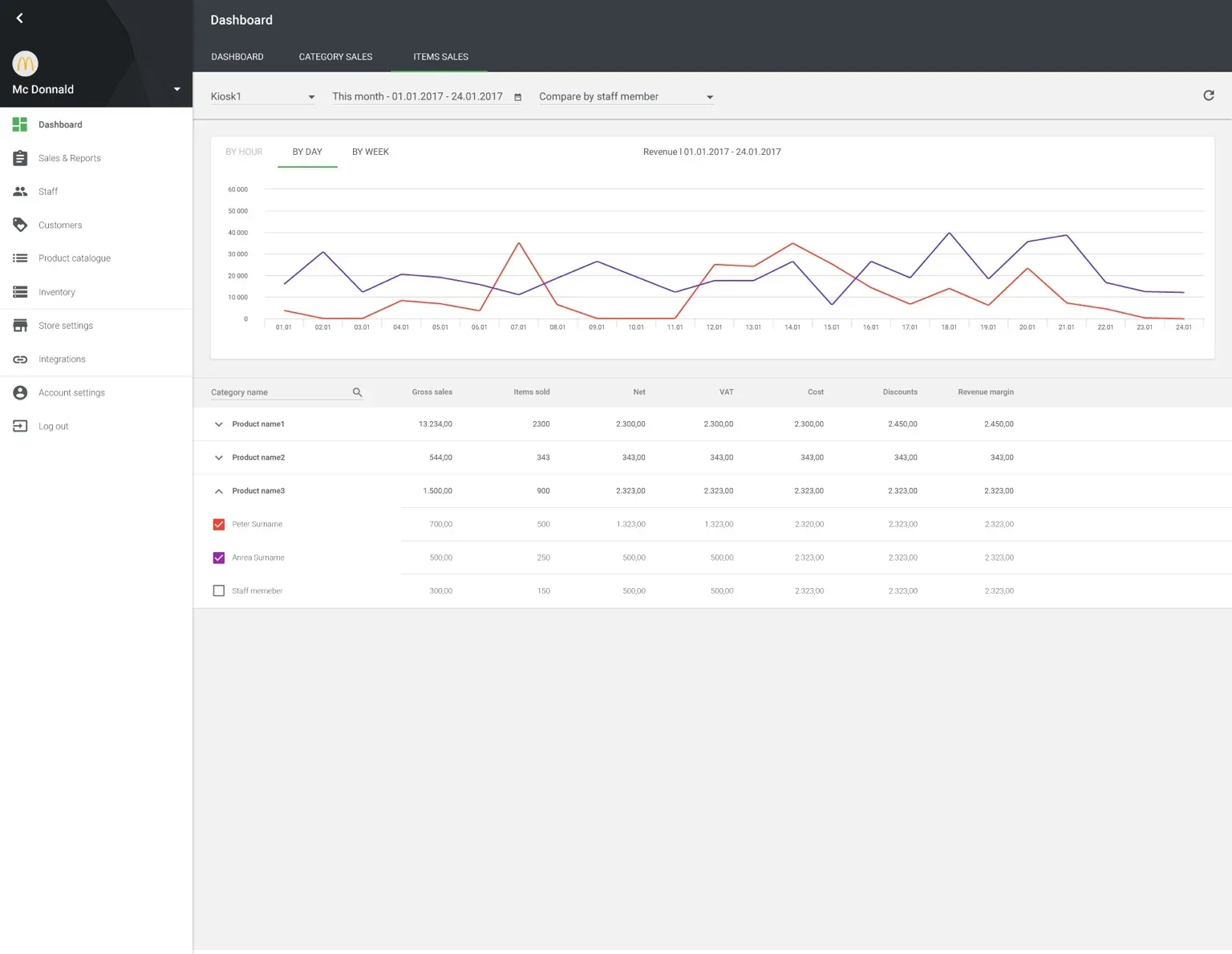
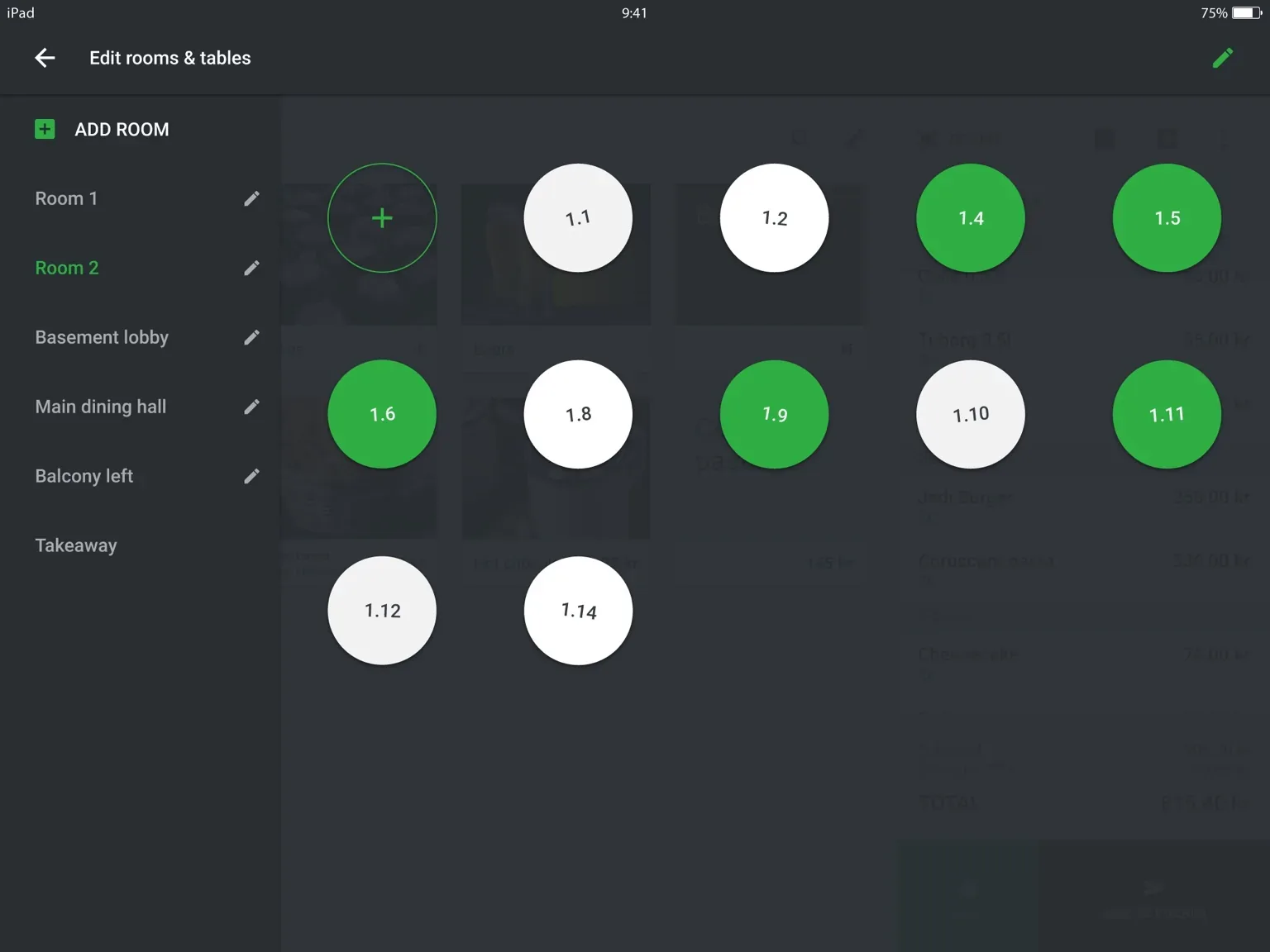
In our customer survey, 3 in 4 merchants found the app easy to use and satisfying.
The problem
The visual mess was only a symptom.
Staff need speed in the middle of service. Owners and finance need to manage dense data. The product had grown unevenly, and the logic underneath had grown apart along with the screens.
One language
Fewer ways of doing the same thing.
I adopted Material Design across both interfaces and built reusable patterns, so staff and developers learned one way of doing each thing. Common behaviour stopped being rebuilt for every feature.
DecisionConsistency is worth it when it removes decisions.
Moving upstream
From interface problems to product problems.
My work moved to feature opportunities, prioritisation, specifications, client requirements and long-term direction, with a team spread across countries. That became my master’s research on distributed software development at the IT University of Copenhagen.
LearnedA design system cannot fix unclear product logic.
Next case study
GymBro →